


Articles
Managing Inter-Floor Leakages in Strata Developments: Understanding Responsibility Under the BSMA
June 08, 2026
Managing Inter-Floor Leakages in Strata Developments: Understanding Responsibility Under the BSMA
My Ceiling Is Leaking — Who Pays?
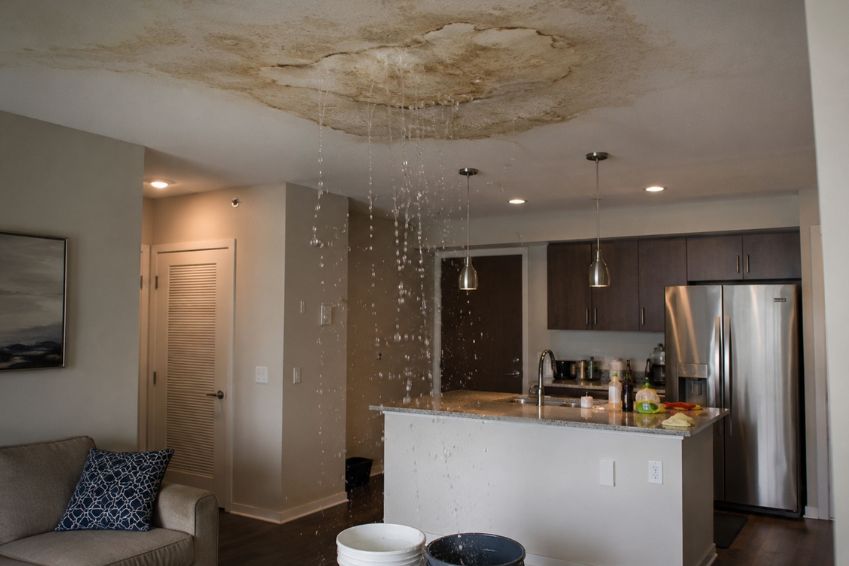
A brown stain appears on your ceiling. Soon, water starts dripping into your living room, bedroom or bathroom. Before long, buckets and towels become part of your home décor.
One of the most common questions raised in Singapore strata developments is:
“My ceiling is leaking because of my upstairs neighbour. Who is responsible for fixing it?”
The answer is not always as straightforward as many owners believe.
While responsibility ultimately depends on the source of the leak, the Building (Strata Management) Act (BSMA) provides an important starting point. Under Section 101(8) of the BSMA, the owner of the upper-floor lot is presumed responsible for an inter-floor leakage unless evidence establishes otherwise.
Understanding this legal framework can help Management Corporations (MCSTs), Managing Agents (MAs), Council Members and strata owners resolve disputes more efficiently and avoid unnecessary conflict.
Why Inter-Floor Leakages Are Common in Strata Developments
Inter-floor leakage is one of the most frequently encountered maintenance issues in residential strata developments, particularly in older estates where waterproofing systems and plumbing installations have deteriorated over time due to age and wear.
Unfortunately, upper-floor owners sometimes adopt a passive approach, especially when the leak does not affect their own enjoyment of the property. As a result, lower-floor owners frequently turn to the MCST or MA for assistance.
Investigating leakages can be time-consuming and technically challenging, often requiring specialised testing and professional expertise to identify the true source.
Recognising these practical difficulties, the BSMA establishes a statutory framework to facilitate investigations and encourage cooperation among affected parties.
The BSMA Presumption Under Section 101(8)
To simplify the investigation and resolution of inter-floor leakages, Section 101(8) of the BSMA creates a statutory presumption that:
The owner of the upper-floor lot is responsible for the inter-floor leakage unless it can be proven otherwise.
This provision shifts the burden of proof and encourages cooperation by the upper-floor owner during the investigation process.
The presumption remains in place until evidence establishes that the leakage is caused by another source, such as common property or building infrastructure that falls under the responsibility of the MCST.
For MAs and MCSTs, this statutory framework provides a practical starting point when handling complaints and coordinating investigations.
Three Common Scenarios
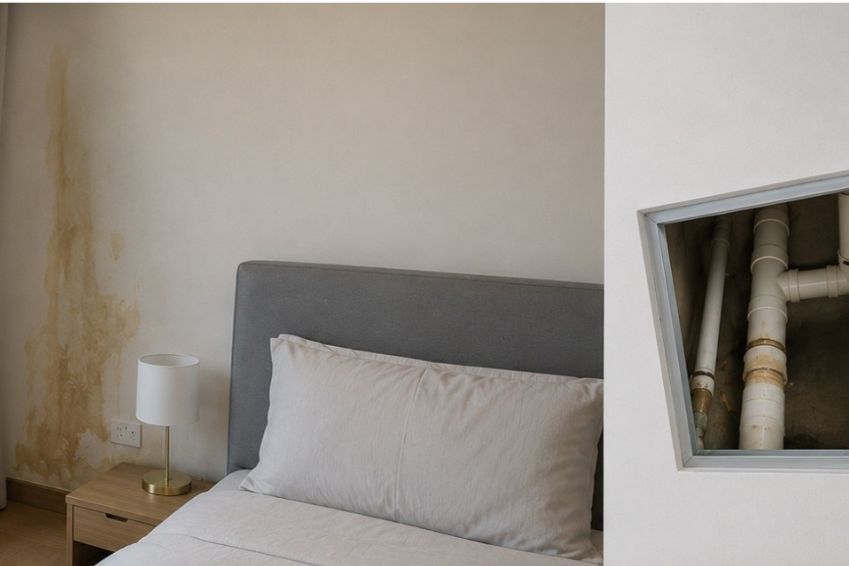
Scenario 1: Leakage Originating from Common Property
Responsible Party: MCST
Examples include:
- Defective roof structures
- Failed waterproofing on common property areas
- Defective external walls or façade systems
- Broken joints between window frames and external walls forming part of the common property
- Defective rainwater downpipes
- Common drainage systems
- Common property pipes serving multiple units
- Building infrastructure embedded within common property
In such cases, the MCST is generally responsible for arranging the repairs.
Scenario 2: Leak from the Upstairs Bathroom Waterproofing System
Responsible Party: Upper-Floor Owner
Examples include:
- Failed waterproofing membranes
- Cracked bathroom floor finishes
- Water seepage through shower areas
- Defective bathroom floor screeding
These components form part of the private lot and are the responsibility of the upper-floor owner.
Scenario 3: Leak from Private Plumbing Within the Upstairs Unit
Responsible Party: Upper-Floor Owner
Examples include:
- Leaking water supply pipes
- Defective sanitary fittings
- Faulty toilet connections
- Leaking basin pipework
- Leaking shower pipework
- Defective washing machine connections
The owner must repair the defective installation.
Recommended Process for Managing Inter-Floor Leakages
Given the frequency of such complaints, every MCST and MA should adopt a clear process flow to ensure consistency and fairness.
Step 1: Receive and Record the Complaint
The lower-floor owner should:
- Take clear photographs and videos of the leakage.
- Record the dates and locations affected.
- Keep records of any damage suffered.
Early documentation helps establish the extent and progression of the problem.
Step 2: Notify Relevant Parties
The complaint should be formally communicated to:
- The MCST or Managing Agent.
- The upper-floor subsidiary proprietor.
Written communication helps establish a clear record of events and demonstrates that reasonable steps have been taken to seek assistance.
Step 3: Conduct Investigation
The MA should coordinate preliminary investigations to determine whether the leakage originates from common property or from the upper-floor lot.
Depending on the circumstances, investigations may include:
- Site inspections
- Moisture testing
- Flood testing
- Leak detection testing
- Plumbing investigations
The objective is to identify the actual source of the leakage rather than relying on assumptions.
Where specialist investigations are required and costs are involved, the parties should discuss and agree beforehand on how such costs will be borne.

Who Pays for the Investigation?
One of the most common disputes concerns the cost of leak detection and investigation works.
In practice:
- The MCST may coordinate the initial investigation process.
- The parties may agree to share investigation costs.
- If the source is ultimately traced to the upper-floor lot, the upper-floor owner may be required to bear the investigation and rectification costs.
- If the source is determined to be common property, the MCST will generally bear the associated costs.
Clear communication regarding investigation costs at the outset can prevent further disputes later.
Step 4: Determine Responsibility
Based on the investigation findings:
- If the source is common property, the MCST undertakes repairs.
- If the source is within the upper-floor lot, the upper-floor owner undertakes repairs.
- If responsibility remains disputed, further expert assessment may be required.
The focus should always be on evidence rather than assumptions.
Step 5: Monitor Rectification
Once responsibility has been established:
- Repair works should be completed promptly.
- Any consequential damage should be addressed.
- Records of rectification should be maintained.
- Affected owners should be kept informed of progress.
Step 6: Escalate if Necessary
If the responsible party refuses to cooperate or no action is taken within a reasonable period:
- The affected owner may seek mediation.
- The matter may be referred to the Strata Titles Board (STB) for determination.
- Legal advice may be sought where appropriate.
Cooperation Is Essential
The statutory presumption under Section 101(8) of the BSMA is intended to encourage cooperation by upper-floor owners.
In many cases, investigations cannot proceed without access to the upper-floor unit. Refusal to allow inspection, testing or repair works often prolongs the dispute and increases costs for all parties involved.
Owners should appreciate that cooperation does not necessarily mean accepting liability. Rather, it allows the true cause of the leakage to be identified and resolved promptly.
Practical Advice for Managing Agents and Strata Managers
Managing inter-floor leakages requires both technical understanding and effective stakeholder management.
Best practices include:
- Establishing a documented leakage investigation procedure.
- Maintaining a panel of qualified contractors and leak detection specialists.
- Communicating clearly and regularly with all affected parties.
- Explaining the BSMA presumption under Section 101(8) early in the process.
- Keeping comprehensive records of inspections, correspondence and findings.
- Ensuring that investigation costs are discussed before works commence.
- Encouraging cooperation from both upper-floor and lower-floor owners.
A structured approach can significantly reduce disputes and improve resident satisfaction.
Key Takeaways
When dealing with an inter-floor leakage complaint, the first question should always be:
“Where is the leak coming from?”
The answer determines responsibility.
MCST Pays When:
- The leak originates from common property.
- The leak arises from common drainage systems.
- The leak is caused by common property infrastructure.
- The leak originates from building elements maintained by the MCST.
Upper-Floor Owner Pays When:
- The leak originates from bathroom waterproofing defects.
- The leak arises from private plumbing installations.
- The source is located within the upper-floor lot.
Important Legal Principle
Under Section 101(8) of the BSMA, the upper-floor owner is presumed responsible for inter-floor leakage unless evidence demonstrates otherwise.
Inter-floor leakages are rarely resolved through assumptions. Early reporting, proper investigation and cooperation between owners, MCSTs and MAs are essential to identify the true source of the problem.
By following a structured process and understanding the legal framework under the BSMA, disputes can often be resolved before they escalate into costly proceedings, helping to preserve harmonious living within the strata community.
Wisely 98 Pte Ltd
We are an Accredited Strata Firm with more than 35 years of real-life experience managing condominiums and strata developments.
We are known as the Digital Strata Managing Agent, delivering smarter and transparent strata property management solutions, from real-time financial visibility to paperless AGMs and automated maintenance requests. We help your community run seamlessly.
Ready to upgrade your strata experience? Contact us now!