


Articles
Why Most Condos Are Underfunded — And the Hidden Cost You’ll Eventually Pay
April 27, 2026
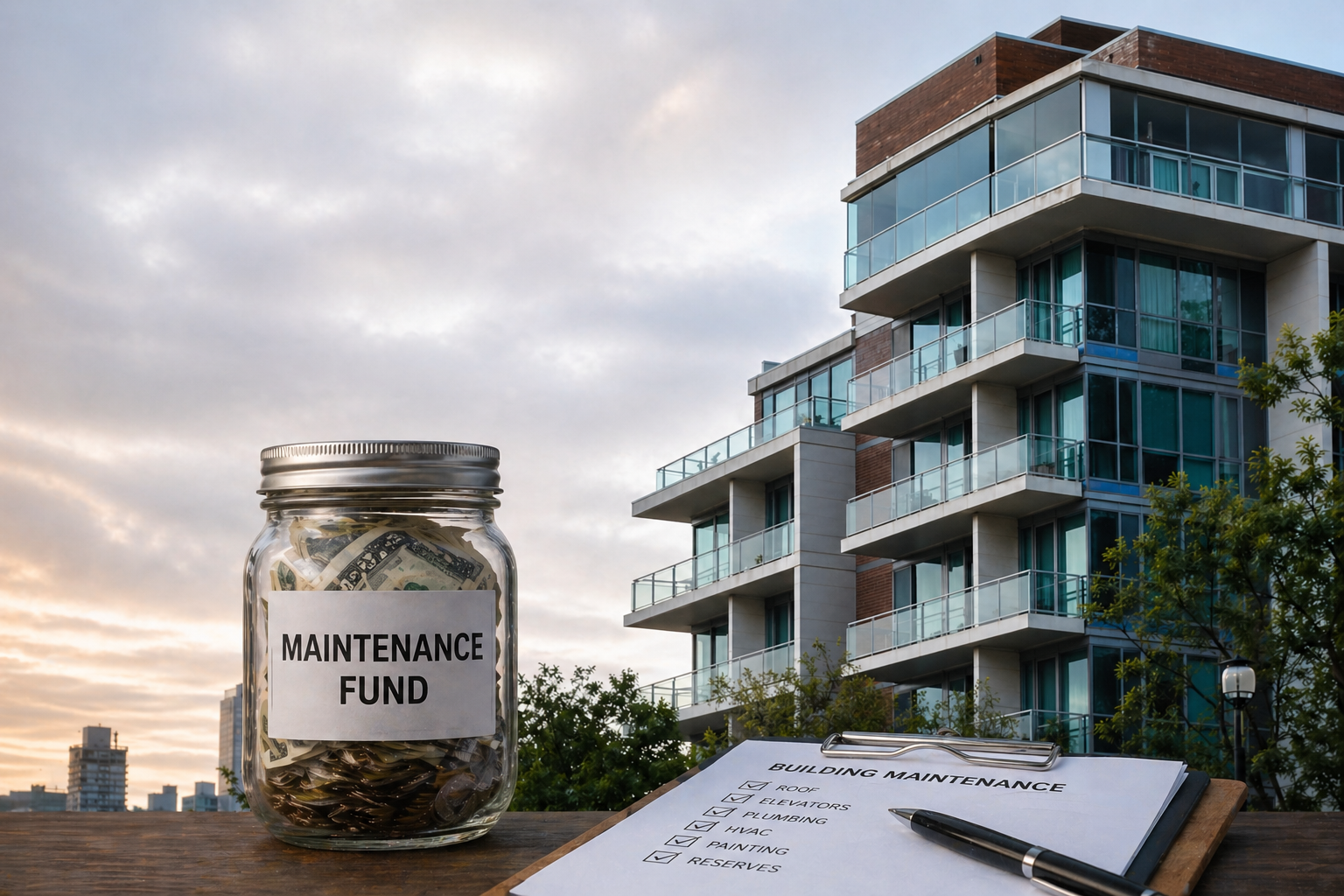
Why Most Condos Are Underfunded — And the Hidden Cost You’ll Eventually Pay
Let’s start with something simple.
Think about how we manage the valuable things in our lives.
A car gets regular servicing, oil changes, tyre replacements—because we know neglect leads to breakdown.
Appliances come with lifespans, and responsible owners set aside money for replacement.
Even our health requires long-term care—we exercise, eat well and plan ahead.
But when it comes to condominiums—assets worth millions—the same logic often disappears.
A typical 100-unit development can easily exceed $100 million in collective value. Larger estates approach a billion dollars. These are not small assets. They are long-term, shared investments.
Yet in condos—where the stakes are exponentially higher—basic maintenance logic often collapses. Step into most Annual General Meetings, and the conversation sounds very different.
You may hear debates about a $5 increase in monthly fees—but not a word about the $2 million lift replacement coming in eight years.
The focus is often on keeping monthly contributions low—while the long-term financial health of the development takes a back seat.

The Real Problem: Underfunding Is Built Into the System
Most special levies are not surprises.
They are the result of years of under planning.
This happens because of a combination of structural and behavioural factors.
Why It Happens: Three Common Trap
1. The “Out of Sight, Out of Mind” Trap
Day-to-day expenses—security, cleaning, landscaping—are visible and immediate.
But major capital components quietly age in the background:
- Lifts nearing the end of their 20–25 year lifecycle
- Water pumps and fire safety systems operating beyond optimal lifespan
- Roofs and car park waterproofing deteriorating out of sight
These are predictable costs, not unexpected ones.
When they are not planned for early, they eventually require large capital outlays. Without sufficient sinking funds, developments are forced into sudden financial shortfalls.
Even when the physical systems are ageing, another force works quietly in the background.
2.Short-Term Ownership Mindset
Singapore’s framework allows sinking fund contributions to start relatively low.
While this reduces immediate costs, it creates long-term risk.
At the same time, many owners do not view themselves as long-term stakeholders. With property values rising, some plan to exit when prices are favourable.
This creates a misalignment:
- Owners prefer lower fees today
- But maintenance costs are pushed into the future
Over time, this leads to systematic underfunding, where future owners bear the consequences through:
- Special levies
- Deferred maintenance
- Declining property standards
3. Gaps in Long-Term Planning
Managing agents play an advisory role—but long-term planning is not always consistently implemented.
Part of the issue lies in industry structure:
- Managing agents are typically appointed on short-term contracts
- There is no universal requirement for formal lifecycle or reserve fund studies
As a result, many developments rely on year-to-year budgeting, instead of structured long-term forecasting.
Effective asset management requires:
- Multi-year planning for major replacements
- Continuity of data
- Alignment between projected costs and sinking fund contributions
Without this, financial planning becomes reactive instead of proactive.
The Bigger Issue: A System That Encourages Short-Term Thinking
These challenges are not caused by a single party.
They are the result of:
- Costs that are predictable but not visible
- Incentives that favour short-term decisions
- A lack of mandatory long-term planning frameworks
Maintenance costs do not appear suddenly—they are simply deferred when ignored.

How to Build Financially Healthy Condos
Good financial management is not about minimising costs.
It is about managing them early and sustainably.
1.Plan 5–15 Years Ahead
Financial planning should go beyond the next financial year.
A proper approach includes mapping out major expenditures over a 5–15 year horizon:
- Mandatory work (e.g. repainting works)
- Replacement of wear-and-tear components (e.g. waterproofing, security systems)
- Major mechanical and electrical replacements (e.g. lifts)
This allows developments to build reserves gradually, instead of facing sudden financial strain.
Globally, leading jurisdictions are shifting toward mandatory reserve studies and lifecycle planning. Singapore will eventually need to follow.
2.Build in a Safety Buffer
Every well-managed budget needs contingency.
A small allocation each year can absorb:
- Unexpected repairs
- Utility cost increases
- Equipment failures
Without this buffer, even minor disruptions can escalate into urgent financial decisions or special levies.
3. Communicate Clearly with Owners
Financial planning only works when owners understand it.
Clear, transparent communication should include:
- Visual projections of future costs
- Historical spending trends
- Simple, plain-English explanations
When owners see how small contributions today prevent large costs tomorrow, support becomes easier to achieve.
Raising the Standard of Strata Management
If Singapore is to remain a world-class place to live, strata management must continue to evolve.
This requires:
- Stronger guidelines on sinking fund adequacy
- Higher professional standards across managing agents
- A shift in mindset—from cost minimisation to asset preservation
A condominium does not run into financial difficulty overnight.
It happens gradually—when planning focuses only on today and neglects tomorrow.
A Smarter Way Forward
At Wisely 98 Pte Ltd, we believe in proactive, professional strata management that protects long-term asset value.
Our expertise includes:
- Strata law and governance
- Lifecycle planning
- Sinking fund forecasting
- Preventive maintenance strategies
Because condo owners deserve predictability—not financial surprises.
Take Action Before It Becomes a Problem
Not sure if your condo is financially prepared for the next 10 years?
Speak to our team at Wisely 98 to review your estate’s financial plan and identify potential funding gaps—before they turn into special levies.
Our team has supported developments through lift replacements, façade works and multi‑year reserve planning.
A well-funded development is not just well-maintained.It is a property that sustains its value over time.
Don’t wait for the next AGM to ask: “Where did the money go?”